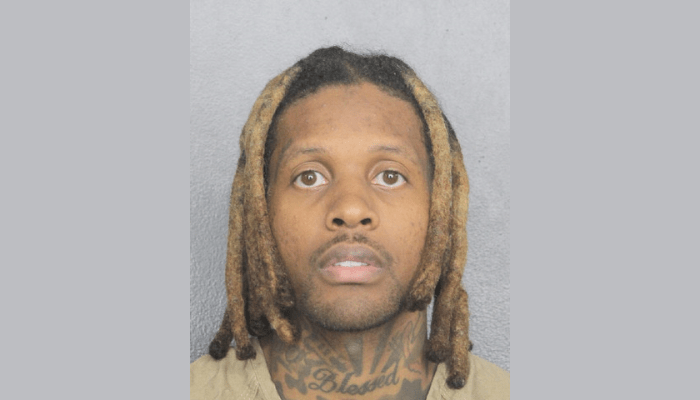
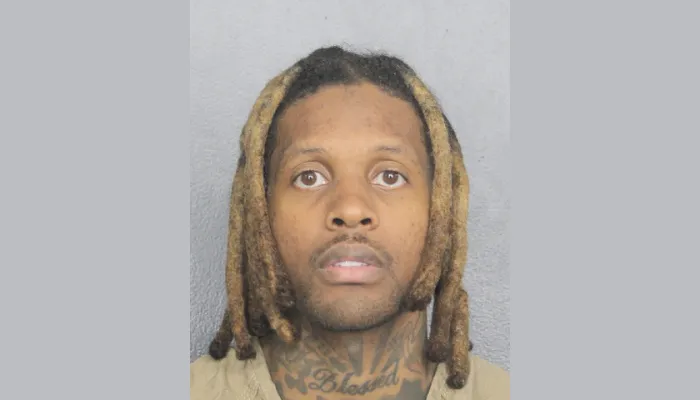
Bobby Shmurda is still waiting for his trial to start, and his struggle gets more epic by the day. In a recent GQ article, the Brooklyn rapper is painted like a victim of the streets, the music industry and the justice system.
Talk about a triple whammy.
The story details Shmurda’s sort of calculated, fairly quick ascent to hitmaking rapper. It also does a wonderful job of detailing the various pitfalls the now 21-year-old born Ackquille Pollard faced along the way, and which may have sealed his fate behind bars.
It also shows that conspiracy theorists aren’t necessarily talking out the sides of their necks when they say the kid is being set up.
Check out eight crazy revelations we noted from GQ‘s story, starting with…
Who’s Your Manager? Okay, Which One?
At one point, Shmurda had dozens of drug dealers acting as his “manager.” However, they didn’t have any music industry experience.
…They were just “some cats from our neighborhood; they used to hustle. So they had, like, Porsches and Maseratis and stuff like that. They had money.”
“Where did they get their money?”
Pollard smiled and opened his eyes wide and laughed.
“That’s not my business!” he said. “That was not my business.”
And so Wilson called for the meeting, a kind of street powwow. Wilson wanted to articulate to Pollard’s neighborhood cronies that the pros were taking over. Wilson expected maybe four or five of Pollard’s friends to show up. Instead, he says, as many as two dozen boys and young men arrived. Some were older, in their 20s or early 30s. “I told them: ‘Hey, you got to stay away. You all can’t be running around screaming “GS9!” and getting in trouble.’ ”
—
Photo: AP Photo
Pay Ya Taxes?
Bobby claimed GS9 aka the G-Stone Crips. But could it be that they were extorting him for his record deal loot?
One source close to Pollard has a theory: The dozens of young men who showed up for that backyard meeting in July were all members of the G-Stone Crips, the very gang that prosecutors maintain is synonymous with GS9. In a sense, if you grew up on those blocks, you were a G-Stone Crip. On the other hand, GS9 was this smaller, closer-knit group of friends who were focused on hip-hop. But because they’d grown up in GSC-land, they were citizens of it—and it was a citizenship, the source suggests, that could not be renounced: “I think a lot of those kids were forced to be gangbangers. ‘Forced’ as in: You’re a Crip, or you’re against us.” And if you’re a GSC citizen, and you become a hip-hop star, you may be subject to a tax.
Bobby Witnessed The Local Weed Dealer Get Murdered
Shmurda aka “Chewy” wanted to pick up some herb at the wrong time, and witnessed the local weed dealer, Pluto, get blown away in a home invasion.
“They shot him right in front of my face,” Chewy recalls now. “When they shot him, I turned my head to the wall, like: I don’t know nothin’, I ain’t see nothin’. They grabbed me into the house. And then they had the gun to my mouth. They were like: ‘Where the drugs at?’ I’m like, ‘Listen, I never been here before. I just came for some weed. I don’t know nothin’ about nothin’.’ ‘Stop fuckin’ lyin’! You wanna die, too?’ I’m like, ‘I do not wanna die, but I don’t know where no drugs are.’ It was like a fucked-up predicament.” The men ransacked the apartment and found the weed. They instructed Chewy and two others who were there to get onto the floor. “They said if we move they gonna kill us right there.” When the men left, Chewy and the others ran to the kitchen, where they found Pluto dead.
Photo: YouTube
Shmoney For Cheap
The “Hot N*gga” video that made Bobby a viral star cost $300. Actually, it was a two for one special.
Within two months, he and a friend named Chad “Rowdy” Marshall had written more than a dozen songs, enough for a mixtape, which they hustled on the street for five bucks a copy. But now they needed to make videos and upload them to social media, an essential step for finding an audience in hip-hop today. They chose two of Pollard’s favorite tracks, “Hot Nigga” and “Shmoney Dance,” and paid a local kid $300 to shoot them.
Where Are The Drugs?
The DA is painting Bobby as the ringleader of GS9 aka the G-Stone Crips, thus their heavy and alleged drug dealing, too. However, where are the drugs?
There were other oddities. For a case against a purported drug gang, there was a curious lack of drugs. No undercover sting had interrupted a GS9 drug transaction. No illicit profits had been sought in forfeiture proceedings. The press release that accompanied the arrest in December 2014 mentioned “proceeds” and “narcotics packaging.” And yet, defense lawyers say, nothing—no narcotics inventory, no packaging, no cash—has yet been shared by prosecutors during pre-trial discovery. (The government must share with the defense any evidence it will present. The prosecution declined to comment on specifics, citing the ongoing trial.) So far, the main evidence of drug sales appears to be the recorded phone calls and the snippets of dialogue about dealing “crills” and “twork.”
Brooklyn’s Home
Epic and Bobby’s management wanted him to record his album in Los Angeles and Florida. But it just wasn’t working.
Sha Money tried to persuade him to stay in Los Angeles and get down to business in a studio there. But Pollard didn’t like L.A. He arrived late to sessions, Sha Money says: “He didn’t work, so it was almost like a waste. When he went to New York, he worked. So I had to go back to New York to record with him there. But I kept telling him: ‘Yo, you need to get out the city. Change it up.’ And he fought me.”
Pollard also abandoned the condo in Florida, returning to Brooklyn and his East Flatbush crew. “Bobby was like, ‘I don’t understand why you won’t let me hang out with my friends,’ ” recalls Flores. “It was a constant battle. Constant.”
Guilty By Association
Law enforcement’s tactics of labelling a group of kids as a “gang” is not nuanced enough. It can lead to jail time for simply running with the wrong crowd, but “they” don’t care.
One former N.Y.C. prosecutor who’s recently entered private practice describes what he calls a “newer trend” in the city’s criminal-justice system, whereby groups of kids, all friends, are lumped together and charged with conspiracy based on individual crimes—drug possession, gun possession, attempted robbery, say—that some in the group have gotten busted for. Now, he says, under conspiracy law, “you put them together as a gang and they’re allresponsible for all their criminal activities.”
The danger, of course, is the possibility of tarring someone with guilt by association, of prosecutorial overreach. “The fact is, the law in this kind of thing is a very blunt instrument,” Kennedy tells me. “Even among people who are really serious law-enforcement folks, people say we’re casting too wide a net.”
Photo: Instagram
When Keep It Real Goes Wrong
Walking the thin like between street credibility and selling entertainment is tough. Shmurda is learning this the hard way.
It is the organizing cliché of rap: the authentic street hustler who exploits his authenticity to create hit songs, find an audience, become rich and famous. The demand for street cred is intense, and the history of the genre is filled with rappers who have felt its lack. The classic case was Tupac Shakur, the sensitive boy who played violin at a prestigious Baltimore art school. Even after he’d made it big, he aggressively sought to build street cred by surrounding himself with real hustlers—until he was shot to death on the Las Vegas Strip, his pursuit of authenticity his downfall.
Shmurda is Shakur’s inverse, in a sense. During the summer of Shmurda, as he strove to launch a career in hip-hop and, behind the scenes, struggled to break away from his old crowd, Pollard worked hard in interviews to accentuate his street cred, aware that authenticity is what would sell. He bragged that he’d dealt drugs as early as the fifth grade, that East Flatbush was like “growing up in the jungle. Gotta be hard. If you ain’t hard, you ain’t gonna stand, you gonna fall.”
Sha Money Tried
Sha Money XL tried in vain to get Bobby to limit the entourage and have him back away from his street buddies. He made his last attempt just moments before Bobby was arrested.
Hours earlier, when Pollard left, Sha Money escorted him down to the lobby—the same lobby where, almost exactly 20 years earlier, unknown assailants shot but did not kill Tupac Shakur. “We had a little kind of like pep talk in the elevator,” Sha Money says. Everyone was acutely aware of the N.Y.P.D. heat on Pollard and GS9.
“I was like: ‘Yo, Bobby, you gotta be careful.’ ” He mentioned the large entourage at the studio. “ ’You need to tone it down, because all eyes is on you.’ ” Pollard nodded and said, “I got you.”